





The is the second part of our interview with key players in the abortion issue in Kansas.
Last week, we published our interview with Peter Northcott, executive director of Kansans for Life.
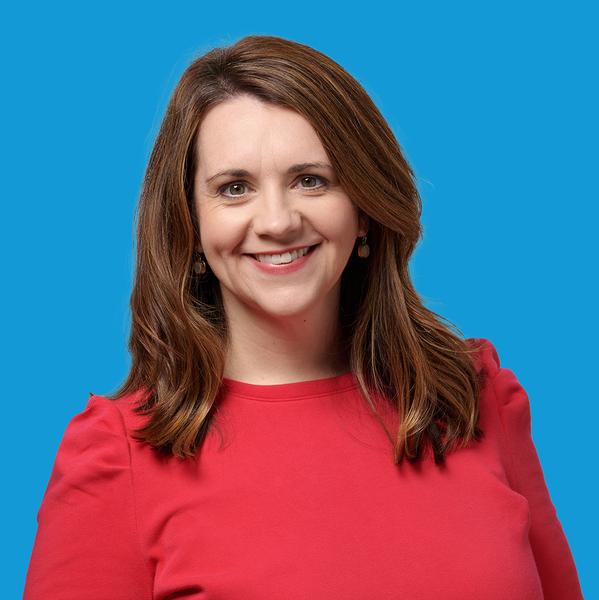
This week, we introduce you to Emily Wales, president and CEO of Planned Parenthood Great Plains and Planned Parenthood Great Plains Votes.
If Republican Josh Hawley had not been elected Missouri attorney general, Emily Wales might not be at Planned Parenthood.
Wales had worked in the Missouri attorney general’s office for Democrat Chris Koster, who later ran for governor and was replaced by Hawley, now a U.S. senator from Missouri.
Wales left the attorney general’s office and joined Planned Parenthood in 2017 as its first general counsel before later serving as chief operating officer.
She became president and CEO of the organization in 2022.
Before joining Planned Parenthood, Wales was an assistant attorney general for the state of Missouri and a fellow through the Georgetown Women’s Law and Public Policy Program at the National Women’s Law Center.
A native of Warrensburg, Wales is a graduate of William Jewell College and Harvard Law School.
She also worked at EMILY’s List, helping to elect pro-choice, female Democratic candidates.
We left Wales’ quotes intact, although some of the interview was edited for clarity and brevity.
What led you to getting involved advocating for abortion rights?
“I’m from Missouri. I was raised in Warrensburg and my dad is a minister and my mom is a librarian. I think choice and abortion access issues have actually been part of my upbringing forever. I don’t think there was any shock to my parents that I am doing this job. When I was growing up, my dad worked at the Presbyterian church and would have session on Tuesday and choir on Wednesday and Citizens for Choice on Thursday. It was kind of part of who he was. I think he was really involved in women’s rights issues and for us, as a family, there was some recognition that individual dignity, human rights were just sort part of our faith and our church but I also, I think, part of the obligation in our family. There was an expectation that we would be involved in the community, that it would be voluntary. That was part of who I was pretty early. In high school, people were always telling me that I would be a lawyer. But that was the common theme. You sort of like to debate. You always have some cause you’re looking for and you’ll probably be a lawyer, and I really resisted that. I went to William Jewell for college and thought I would maybe be in academia or maybe a social worker, and I did keep coming back to legal work. I think I am very much the marriage of my parents. My dad is a communicator, a presenter and loves to be in front of people and very much a one-on-one person who engages others, and my mom is a researcher and a writer. I think I have found the job that is the two of them.”
You said your father was a Presbyterian minister. Were you deeply religious?
“We were really, really involved in the church. My dad’s schedule was more flexible than my mom’s. My mom worked at the university in the library there. She had more traditional hours, was primarily the breadwinner in our family. My dad was the one who dropped us off, picked us up. We spent a lot of evenings at church hanging out while he did meetings or counseling. When we would go on vacation, my dad would take four Sundays off a year and he really hated to take even the four. He would prefer if he could just like do one or two. If we could leave on a Monday and get back on a Saturday, that was the preference.”
Why did you attend William Jewell?
“I really wanted to go to a small school. I think I loved the idea of being involved in a lot of different things on campus. I was hesitant to go to Jewell initially because I’m not Baptist. At that point, Jewell was in the news all the time when I went to school because they were having the breakup with the Missouri Baptist Convention. There was a big conversation happening publicly that I read about in The Star all the time about the ‘Vagina Monologues’ on campus, gay rights for students. So when I toured schools, I went to Jewell just because I had a good friend who was there and told her going in, ‘I have no intention of coming here. I think it’s going to be too conservative. It won’t be a good fit for me.’ I met with a professor, who ended up being and is still a very close mentor of mine, who said if, ‘If you want to go to a big school or small progressive liberal arts school and just be like everyone else, that’s fine. But if you want to come here and make a true difference in the life of the college and influence what your fellow students’ experiences are like, you should come here.’ I went there and had a wonderful experience.”
What took you to EMILY’S List immediately after leaving William Jewell?
“I wanted to be in politics. I wanted to work for Democratic women candidates and EMILY’S List was the place to do it. I actually took a job at Goodwill – the national office – and had a good experience. I was probably the youngest person at the national office. It wasn’t political. So when I got an opportunity to go to EMILY’S List, I took a pay cut, took what felt like a much less stable campaign-style job and loved. I absolutely loved it.”
What took to you to politics?
“My parents, although they were passionate about human rights and serving the community, they were not political. We would’ve never put a political sign in our yard, partially because of the church. I think my dad felt strongly that congregates should be able to come from any political background and find a church home as long as the values supported them. I think that’s where maybe I took my dad’s perspective and went a step farther. I think the political is so part of every piece of who you are in a community, part of your identity. But my parents were not that openly political. But I always loved politics. I think we had good, local politicians when I was young. The state rep was a woman. I grew up thinking it was really normal to have a Democratic woman from a rural seat. Now, that would never happen in my hometown or where I was in Missouri. I was always just sort of drawn to politics. Once I was at EMILY’S List, I got to have an idea more about how campaigns work, but also it was also clear to me that the candidates that I loved or that I most identified with or I wanted to sort of emulate were either social workers or lawyers. I didn’t want to be a campaign person forever. I didn’t want to do fundraising, but I wanted to get into the policy piece and to how politics intersect with an individual’s life. So I had a moment: Am I going to get a social work degree, or am I going to go to law school. I ended up on law school.”
On not taking a job with a law firm after graduating from Harvard Law School.
“I had a lot of friends who ended up at big firms, of course, in New York, or D.C. or San Francisco. I didn’t want to go to a firm. I came back after my second summer and did a summer internship at a law firm here because I knew I wanted to come back. My one criteria in finding a firm was that I wanted it to have a connection to progressive work. So the ACLU in D.C., where I had done my summer my first year, recommended a firm they worked with here. And that was probably telling that I wasn’t going to be a private firm person. I had a good experience here. I knew pretty quickly that probably being in a firm didn’t make sense for me.”
How did you end up at Planned Parenthood?
“If I could have written the job, it would have been the general counsel for Planned Parenthood in our region. The catapult to get here, though, was that Josh Hawley won the attorney general’s race in Missouri. I worked for the attorney general. When I came back (from law school), a childhood friend of mine whose dad had been a local judge in Warrensburg and was on the court of appeals worked for (Attorney General Chris Koster), and so when I was sort of job searching I knew that Judge Joe Dandurand was there. I went through the interview process. He sort of persuaded me like, ‘If you want to be a good litigator, practice in local Missouri courts, get to know folks who do this work around the state, it’s a great first job.’ I loved being in the attorney general’s office. When General Hawley took over that seat, it did change fairly quickly. My job was not a political one. I was representing the state and employees of the state in different disputes. But a lot of people left. A lot of the mentors we had there left. The people who came into those political roles were not openly oppositional, but they certainly got to review our resumes and see our background and it was clear I wasn’t a fit. There was no ask to leave, and in some ways I think I had opportunities because so many senior attorneys left that suddenly junior attorneys got bigger cases. But my politics were not a fit for the office. I actually had an opportunity for a bigger role there to do more leadership and employment litigation because they needed people who wanted to try cases. It’s also really hard if you are somewhat opposed to the role of government in protecting and defending the people or having a larger presence. It’s really hard to recruit attorneys to want to work for the government if your position is anti-government. I think there were opportunities for me there. But this role opened. At that time it was the first time that (Planned Parenthood) had an in-house counsel for four states, and it felt like too big of a job. But the moment was there. Josh Hawley was leading the office and I was ready to make a move. So, I was really happy it worked out.”
How does your role as president and chief executive differ from the role you first took with Planned Parenthood as general counsel?
“My job is much more public facing. Of course, it’s a lot of media. It’s a lot of, I think, staff support and oversight. I spend a lot of time doing staff communications and planning, of course, the budget, engaging with the board. I am much more involved in the direct provision of care than I was. Even though I was consulting in the general counsel role, I am much more engaged in how our schedules work, the number of patients we’re working to serve, pushing out and marketing toward patients.”
What is the biggest challenge in your current role?
“I think it’s staff reassurance and stability. There are things about having people who really oppose your work or politicians who center you as the enemy that can bring the team together. In the post-Dobbs world where we just have more patients than we can serve, really high need, highly emotional patients, keeping staff motivated, feeling like the organization is going in the right direction, we have plans even though the world around us is constantly in chaos, has been the biggest challenge. A lot of the job is cheerleading and reassuring and reminding people that the work they do matters so much and is so bigger than us.”
How long do you think the Kansas Supreme Court’s decision in Hodes will remain on the books?
“I think it will be on the books for a long time. Partially because the court really grounded its decision in history and tradition that has been true in Kansas for a long time. It did not come out of nowhere. I think people who weren’t paying attention may feel that way, but when you read the decision, it is so thoughtful and it is so true to Kansas, so uniquely Kansas, that I think it captured where the people were even before we had a vote. Then we had a vote, and the people of the state had the opportunity to functionally ratify what the courts had decided. I think we’re going to live in this world for a long time.
Are you not concerned that another Kansas governor might appoint judges to the Kansas Supreme Court who would overturn Hodes?
“It has to be a concern and you do have to be vigilant. There’s a reason we didn’t after the vote just close down our advocacy arm and say, ‘OK, we’ve done it, it’s decided, it’s resolved.’ We do have supporters who feel that way. We have supporters who feel betrayed and furious that the Legislature keeps passing restrictions even if they’re enjoined or blocked. You don’t let up. You do have to be thoughtful that the world can change. It feels like we have the wind at our back in Kansas because we had this vote after a stellar decision. But also now we get to see what’s happening in Ohio and Michigan and Kentucky and, hopefully soon, Missouri, where Kansas is not the outlier. It’s not that the judges got it wrong or they missed the moment, I think we just led the way.”
Where do you think the abortion rights movement is headed nationally and in Kansas?
“I think we’re still working somewhat defensively in Kansas. Realistically, we can never take for granted that any session will not involve abortion issues. Even if not all those bills are getting to the final point of being passed, we still see a lot of restrictions and we have to lobby hard. It’s not that abortion is available for every person who needs it in the state. I think ultimately what needs to happen is for abortion care to become normalized. My vision for Kansans, would be wherever you life – if you’re in western Kansas, if you’re in a rural part of the state, that you have some access to what is time sensitive and critical care and that’s still not true in the state. I know there’s a lot of conversation, of course, about increasing numbers, out-of-state patients – those are real things. But abortion is not normalized health care here. It is still far too restricted, it is not commonly happening outside of Planned Parenthood. So, that needs to happen. At the national level, I think we are going to be in a tough position for some period of time where you will have states like Missouri, hopefully soon Arkansas, Oklahoma who still have the initiative petition process and can restore access on their own, but it’s a smaller and smaller number. So many states are moving forward this cycle that we are left with only a handful of states that still have the citizen-initiated process and have bans or similar restrictions in place. And a change for a state like Texas or Louisiana or Mississippi is going to require federal protections, which don’t seem to be around the corner. I think maybe there’s a path there, but it’s not going to be immediate. Or those states’ entire local politics change.”
Where do you go from this position?
“I mean, I love my job. It is hard to imagine a job that is more interesting or more rewarding. It’s also hard to imagine that you can do it forever or that you should do it forever. We tell staff – this has been sort of my mantra and I do mean it and I talk to our team about it – that it is a marathon to do reproductive rights work. It is not anything you should be ashamed of to hand the baton to someone else and say, ‘I have put in my time, I have given my all and someone else can step in.’ When someone leaves Planned Parenthood, you’re always part of the family. We also have people who come back, of course, who say, ‘I needed to take a break’ and return. I hope to be here a long time. I cannot wait to be involved in the restoration of rights in Missouri, which is , if course, my home state. We haven’t had abortion access in central or western Missouri in six years. The idea that we can restore a fundamental right to that part of the state is exciting. And the other two states we serve as Planned Parenthood Great Plains both have the initiative petition process. I don’t feel like I’ve done what I need to do. There is work ahead, and it’s work that we are increasingly skilled and experienced at doing.”