



Member Login
Home Kansas Rahjes leaves airwaves following FCC complaint lodged by Proctor

Rahjes leaves airwaves following FCC complaint lodged by Proctor

0
612
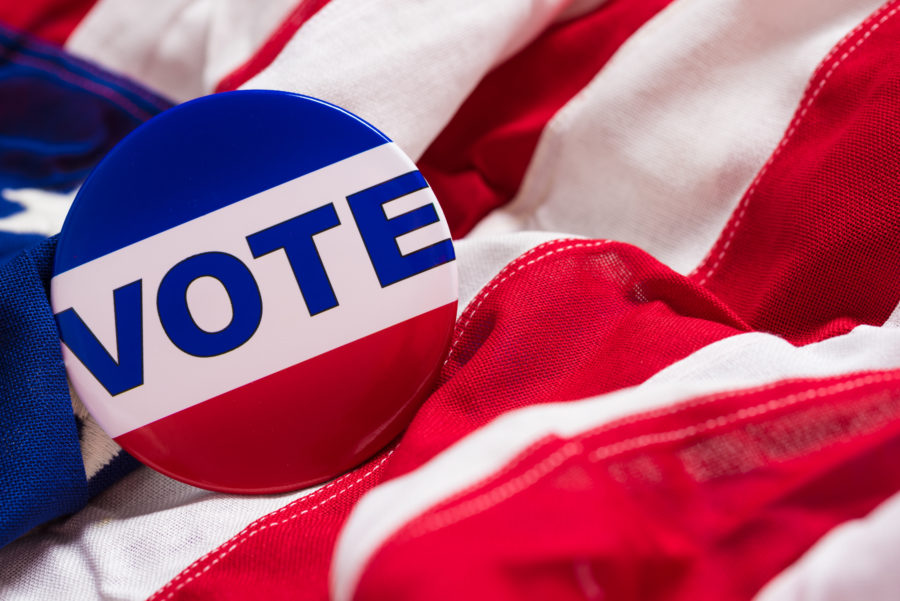
A "VOTE" pin or button on a flag of the United States

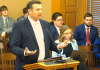
Republican state Rep. Ken Rahjes has stepped aside from his role as the director of agricultural programming for a statewide network of Kansas radio stations following a complaint brought by his Republican rival for secretary of state seeking equal access to the airwaves.

Rahjes gave up his broadcasting responsibilities for the 34 stations operated by Murfin Media at the end of February after state Rep. Pat Proctor filed a complaint with the Federal Communications Commission because he couldn’t get equal air time in the race for secretary of state.

The complaint was filed Feb. 20 and by Feb. 27 Rahjes’ farm commodity reports had ended. He provided one-minute agriculture reports six times a day across the Murfin network plus a long-form story for KBUF radio.

Ken Rahjes

The chief executive officer for Murfin Radio said the broadcaster had already planned to end the agricultural programming, but the FCC complaint expedited those plans.

Proctor reached a settlement with Murfin Media, which has agreed to provide 4,000 minutes – almost 67 hours – of free air time from June 26 through July 31 right before this summer’s primary election.

The time, spread out across 34 Murfin-owned stations, will be aired in one-minute segments. The time will be provided within one hour of the time of day that Rahjes’ agriculture reports aired.

Rahjes said his segments aired weekdays from about 6 a.m. until about 2:30 p.m. The settlement agreement was signed at the end of March.

Proctor said he knew that Rahjes had been working on radio and believed that after the first fundraising reports came in at the first of the year that Rahjes would pull out of the race.

Pat Proctor

Proctor reported raising about $312,000 in his bid for Kansas secretary of state during 2025, outdistancing Rahjes by almost $290,000.

Proctor said if Rahjes had withdrawn from the race, the FCC complaint would not have been filed.

“I’m asserting my rights,” Proctor said in an interview.

“If he’s going to be on the air uninterrupted without any challenge for hours and hours and hours across 30 some radio stations all over western Kansas and be my opponent then I’m owed equal time,” he said.

Rahjes said he was disappointed that Proctor didn’t try to amicably resolve the issue instead of escalating it to a legal complaint to the FCC followed by a cease-and-desist order.

“It’s just unfortunate,” he said. “I think this could have been handled much differently with one short conversation and instead he chose to cost both of us legal fees.”

Rahjes said it wasn’t the “Kansas way” to address a disagreement. Rahjes said Proctor, in a “roundabout way,” was trying to plant seeds of doubt about his integrity.

“I will put my record up against anyone,” he said. “He must obviously be concerned if he’s finding every way he can to try to discredit me and to take away what I believe is a right to live.”

Rahjes said he had no hard feelings toward the station and left on good terms.

Rahjes said he was a broadcaster long before he ran for public office and always tried to adhere to the rules set out by the Federal Communications Commission.

Rahjes said he knew there was an equal time provision in federal regulations but he thought that covered a few weeks before an election and that he planned to get off the air five to seven weeks before the Aug. 4 primary.

“I understood what I thought the rules were,” he said.

Rahjes said he wasn’t commentator opining on the political events of the day including the happenings in Topeka, although he introduced himself at the outset of the segments he did for the station.

He also signed off as himself on each broadcast.

“I understand completely if I was a talk-show host or if I was somebody spouting my opinion,” he said.

However, FCC rules say that if a known personality appears on the air of a broadcast radio or TV show and has achieved the status of “legally qualified candidate,” the station will be required to entertain requests for
equal opportunities by opposing legally qualified candidates for the same office.

The station isn’t required to seek out opposing qualified candidates and offer them equal opportunities.

Proctor’s lawyers also pointed to a 1987 federal appeals court decision finding that broadcasters must provide equal time to all political candidates when one candidate appears on screen, even if the appearance is part of their regular reporting responsibilities.

Mark Yearout, the chief executive officer for Murfin Media, said he initially objected to Proctor’s request for equal time. He didn’t believe Rahjes agriculture reports qualified for equal time.

“I don’t think that somebody should be forced to take a leave of absence because they’re running for state office,” Yearout said. “I just don’t think that’s fair.”

But lawyers concluded that the station needed to provide equal time to Proctor based on existing  case law and the current interpretation of the FCC regulations.

“Everything pointed to: Why fight, let’s settle,” he said.

Yearout said that while the settlement seems like a lot of time it’s not because the segments are spread across almost three dozen stations plus seven translator stations, which rebroadcast the signal of a primary AM or FM station on a different frequency.